

Autism in School: Supporting Your Child’s Success in the Classroom

Students practicing communication and classroom participation with their teacher

Table of Contents

Helping Your Child Succeed with Autism in School

Starting school can bring both excitement and uncertainty for families of children with autism. Parents often wonder how to explain their child’s needs, ask what support is available, and ensure their child has every opportunity to learn, participate, and feel included.

Many families worry about not knowing enough about educational systems to speak up confidently. However, effective autism advocacy does not require parents to become experts overnight. It begins with something you already know better than anyone else: your child.

At ABA Centers of Pennsylvania, we know parents play an essential role in supporting autism in school because they bring valuable insights about their child’s communication style, strengths, interests, and daily experiences. Sharing that knowledge helps teachers and school teams develop individualized supports that encourage participation, learning, and independence.

To learn how you can prepare for school meetings, communicate with educators, understand school accommodations for autism, and build collaborative partnerships that evolve alongside their child’s needs, continue reading this blog.

How Can I Advocate for My Child with Autism in School?

Parents can practice autism advocacy at school for their child on the spectrum by sharing clear observations about their child’s strengths and needs, preparing for educational meetings, asking specific questions, and maintaining ongoing communication with teachers and support staff, finding individualized solutions that help the student participate, learn, and feel supported throughout the school day.
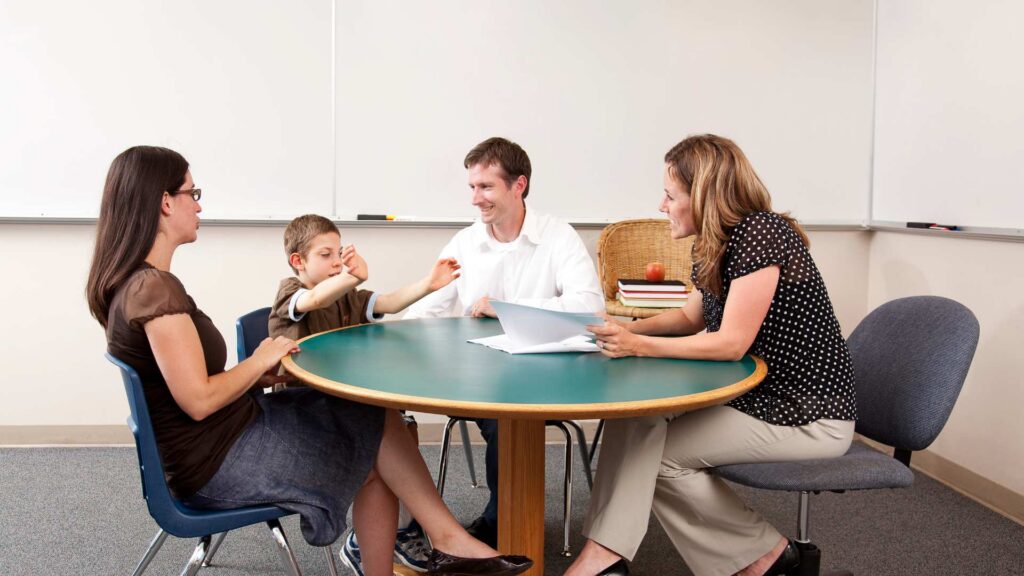
Parents and educators discussing individualized support for autism in school

Under the federal Individuals with Disabilities Education Act (IDEA), parents are recognized as equal members of their child’s educational team. This team develops an Individualized Education Program (IEP), a legal document that outlines the specific goals, supports, and services a student receives to succeed in school. You bring crucial information to this process that rarely appears in formal evaluations, such as what motivates your child, how they communicate best, or what strategies reduce frustration at home.

One of the most effective ways for autism advocacy is to identify two or three priorities before meeting with the school:

  • Improving transitions between activities
  • Increasing classroom participation
  • Supporting communication with teachers or classmates
  • Reducing stress during unstructured times like recess or lunch

Keeping discussions centered on specific goals leads to more productive outcomes.

Instead of: “My child struggles at school.”

Try explaining: “My child becomes overwhelmed during large-group activities but participates well when instructions are presented visually. Could we explore additional visual supports in the classroom?”

Understanding Autism in the Classroom

Autism in the classroom can present challenges that are significantly different from those experienced at home. Busy environments, frequent transitions, group instruction, and changing social expectations create unique barriers to learning, making individualized support essential to educational success.

Child feeling overwhelmed while completing schoolwork at a desk

A typical school day asks students to manage multiple complex demands at once. Students must listen to verbal instructions while filtering background noise, transition quickly between activities, and adjust to changing routines, all while managing academic expectations.

For many autistic students, these environmental demands are more challenging than the learning material itself.

The  Pennsylvania Training and Technical Assistance Network (PaTTAN) emphasizes that educational supports must be individualized rather than based on a diagnostic label alone. Understanding the specific environmental barriers affecting participation allows schools to create targeted strategies that help students access learning successfully.

How to Support a Child with Autism in School

Supporting a child with autism in school begins by identifying the specific situations that affect their learning, communication, or participation. Effective support combines individualized school accommodations for autism, consistent routines, adult collaboration, and a clear understanding of each student’s unique strengths.

Every child experiences school differently. 

Parents can accelerate support by sharing key insights about their child, including:

  • Communication methods that work best
  • Sensory preferences or sensitivities
  • Effective calming strategies and successful transition routines
  • Personal interests that increase motivation

When appropriate, families can also share helpful strategies used in other settings, such as home or therapy. If visual schedules, first-then boards, or specific transition supports have helped your child build independence, those insights can often be adapted for the classroom. The goal is to create consistency across environments so children can apply important skills confidently.

What School Accommodations for Autism May Help?

School accommodations for autism are individualized changes that help students access instruction, communicate effectively, regulate emotions, and participate successfully without changing basic learning expectations.

Rather than requesting a generic list of accommodations, identify the barrier first and then select a support that addresses that specific challenge:

Classroom Barrier

Possible Accommodation

Desired Outcome

Difficulty following verbal instructions

Written or visual directions

Greater independence completing tasks

Overwhelming classroom noise

Quiet workspace or noise-reducing headphones

Improved focus and participation

Challenging transitions

Visual schedule or advance notice

Smoother transitions between activities

Limited processing time

Extra time to respond or complete assignments

Reduced frustration and accurate participation

Sensory overload

Scheduled sensory breaks

Better emotional regulation throughout the day

PaTTAN reinforces that school accommodations for autism must reflect an individual student’s learning profile. Meaningful accommodations remove environmental barriers while encouraging independence.

How to Prepare for an IEP or School Meeting

Preparing for an IEP or school meeting starts with identifying your child’s strengths, documenting specific concerns, and defining clear outcomes. Coming prepared with observations and questions creates more productive, collaborative conversations.

Consider bringing:

  • Recent evaluations or reports
  • Notes about behavioral or emotional patterns observed at home
  • Examples of strategies that have proven successful
  • A short list of top priorities and questions
Parent taking notes about their child with autism for school meeting

Remember that under IDEA, parents are recognized as equal, essential members of the educational team whose insights are critical to building an effective plan.

Building a Strong Family-School Partnership

Strong family-school partnerships are built through regular, two-way communication that allows parents and educators to share observations, celebrate successes, and adjust supports over time.

Communication is most effective when it happens consistently—not only during crises. Sharing positive updates at home (such as a new communication success) gives teachers valuable context, just as classroom updates help parents reinforce progress at home.

Ongoing collaboration between families and educators directly improves student engagement, social participation, and support consistency across settings.

How Can You Tell Whether School Support Is Working?
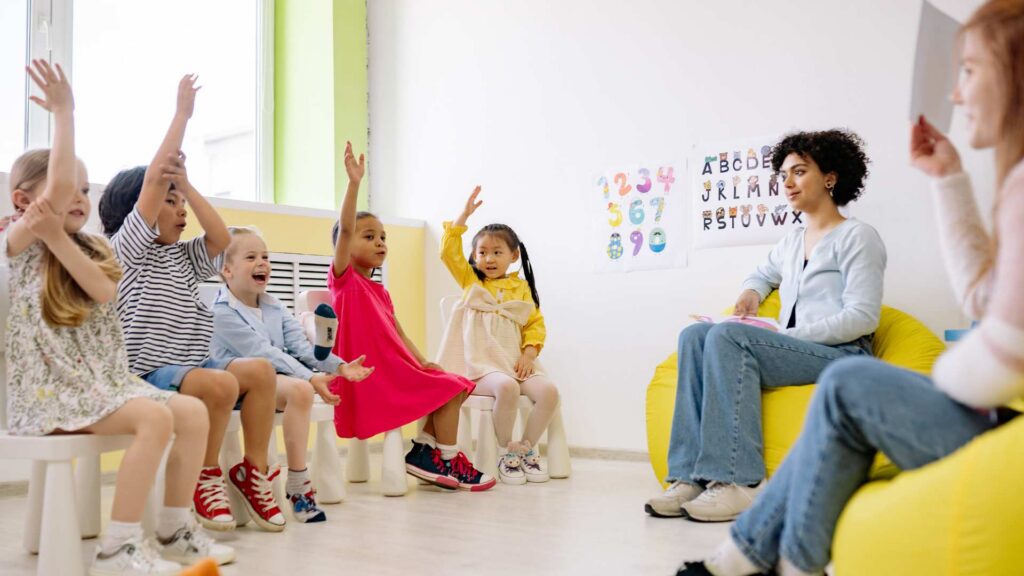
Children with autism in school raising their hands during an inclusive classroom activity

School support is working when it helps a student participate more successfully in learning and daily school life. While academic metrics matter, meaningful progress also includes improved communication, greater independence, stronger peer relationships, and increased confidence.

Look for a combination of positive indicators:

  • Participating more frequently during classroom activities
  • Recovering more quickly after challenging or overwhelming situations
  • Asking for help independently
  • Transitioning between tasks with less distress
  • Feeling more comfortable attending school

Ask teachers about participation rather than focusing exclusively on completed assignments or behavior. Questions like “Is my child participating more during discussions?” or “Which supports seem to help them feel most confident?” offer deep insight into your child’s daily experience.

Success is measured by access, independence, and belonging.

Helping Your Child Thrive in Every Stage of School with ABA Centers of Pennsylvania

Autism advocacy is an ongoing process because educational needs naturally evolve. As academic expectations, social situations, and independence demands increase, supports must be updated.


School accommodations for autism that help in early elementary school look very different from those needed in middle or high school. As your child grows, discussions naturally shift toward managing complex workloads, navigating changing friendships, developing self-advocacy skills, and preparing for postsecondary transitions.

Smiling student with autism in school holding books and feeling confident

Supporting autism in school does not require having every answer immediately. It starts with understanding your child’s unique strengths, communicating openly with educators, and taking one thoughtful step at a time.

At ABA Centers of Pennsylvania, we know school is a central part of your child’s developmental journey.

When appropriate, insights gained through ABA therapy can complement classroom strategies for autism in school, helping establish consistency across all areas of life. Our in-school ABA services may also provide additional support by helping children practice communication, social, and behavioral skills within the classroom while working collaboratively with school staff and families.

Visit our website or call our team at (844) 444-7496 to learn more about how individualized therapy supports, such as our in-school ABA therapy program, can support everyday growth.

Scroll to Top