


Table of Contents
How to Measure Progress in ABA?
After deciding that Applied Behavior Analysis (ABA) therapy is the right next step, many parents start having new questions and wonder what happens next. What kinds of skills will their child work on? How will ABA professionals know whether treatment is helping? And what does meaningful progress actually look like?
One of the most important things to understand is that there is no single roadmap for every child. ABA therapy goals are individualized to reflect each child’s strengths, support needs, interests, and everyday challenges.
Rather than focusing on reaching developmental milestones on a fixed timeline, ABA therapy goals aim to build functional skills that help children participate more confidently at home, at school, and in their communities.
At ABA Centers of Pennsylvania, we know that parents want realistic expectations. Progress in ABA therapy rarely happens overnight, and dramatic changes don’t always measure it: it appears through steady improvements that make everyday life easier, more enjoyable, and more independent for children and their families.
What Are ABA Therapy Goals?
ABA therapy goals are individualized objectives designed to help children develop meaningful skills that improve everyday life. Depending on a child’s strengths and needs, goals may focus on communication, social interaction, daily living skills, emotional regulation, safety, or independence.
According to the Council of Autism Service Providers, effective ABA programs are built around comprehensive assessments rather than one-size-fits-all expectations. Goals are selected to address skills that meaningfully impact a child’s quality of life, helping them become more successful in everyday situations.
That means two children receiving ABA therapy may have completely different treatment goals, even if they share the same diagnosis.
Also, needs change as children grow, and ABA therapy goals evolve with them. As new skills develop, therapists continue adjusting goals to encourage continued learning and independence.
How Are ABA Therapy Goals Created?
ABA therapy goals are created through a comprehensive evaluation of each child’s strengths, support needs, developmental level, and everyday functioning, where professionals identify the skills that will make the greatest difference in the child’s daily life.
Within their sessions, BCBAs consider how a child communicates, learns, plays, interacts with others, and participates in everyday routines. Your input as a parent also helps ensure that therapy focuses on priorities that are meaningful for your child and family, whether that’s improving mealtime routines, increasing independence, or building social confidence.
5 Examples of Common ABA Therapy Goals
It’s natural to wonder whether your child will work on communication, behavior, independence, or social skills, or all of the above. The answer depends on your child’s and your family’s skills and day-to-day life.
Rather than choosing goals based on a diagnosis alone, BCBAs identify the skills that will have the greatest impact on a child’s ability to participate in family life, school, and the community. A child who has difficulty communicating their needs may benefit from communication goals, while another child might focus on daily living skills or learning to navigate transitions more independently.
The examples below illustrate some of the broad areas that ABA therapy commonly addresses. They are not a checklist that every child will follow, but they can help parents better understand how individualized goals are selected.
Examples may include:
Goal Area | Example Goal |
Communication | Requesting help or expressing needs appropriately |
Daily Living Skills | Washing hands, dressing, or following routines |
Social Skills | Taking turns, sharing, or joining group activities |
Emotional Regulation | Asking for a break or using calming strategies |
Safety | Responding to name or following simple safety instructions |
These goals often work together rather than in isolation. As children develop new skills, therapists continue reviewing progress and updating goals to reflect changing strengths, priorities, and developmental needs.
What Does Progress in ABA Therapy Look Like?
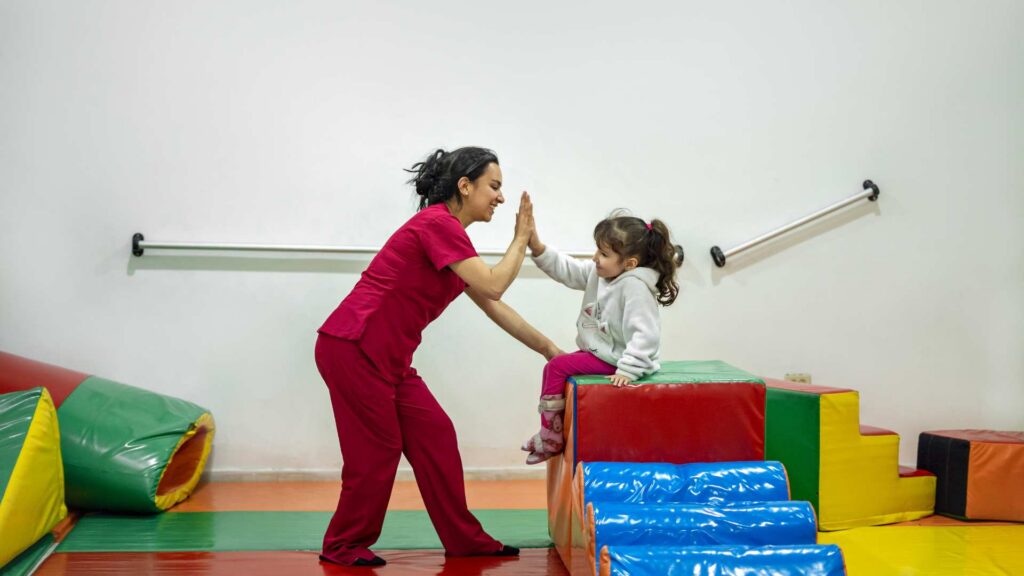
Progress in ABA therapy is reflected through gradual, measurable improvements toward individualized goals. Therapists evaluate how consistently a child develops functional skills that support greater independence and participation in everyday life.
Meaningful progress tends to appear through small changes that build over time.
For example, a child might:
- Communicate a need instead of becoming frustrated
- Transition between activities with fewer reminders
- Participate more comfortably in family routines
- Develop greater independence during self-care tasks
- Engage more confidently with peers or siblings
Research emphasizes that meaningful progress in ABA therapy is evaluated through systematic, ongoing data collection rather than observation alone. During therapy sessions, BCBAs and RBTs collect objective information that helps them determine whether goals are being achieved or whether strategies should be adjusted.
This data-driven approach allows therapy to remain responsive to each child’s learning style while continuing to move toward meaningful, long-term outcomes.
What Happens During ABA Sessions for Kids?
ABA sessions for kids are designed to help children practice individualized goals through engaging, meaningful activities. RBTs use play-based learning, Natural Environment Teaching (NET), and positive reinforcement to help children develop skills they can use beyond the therapy setting.
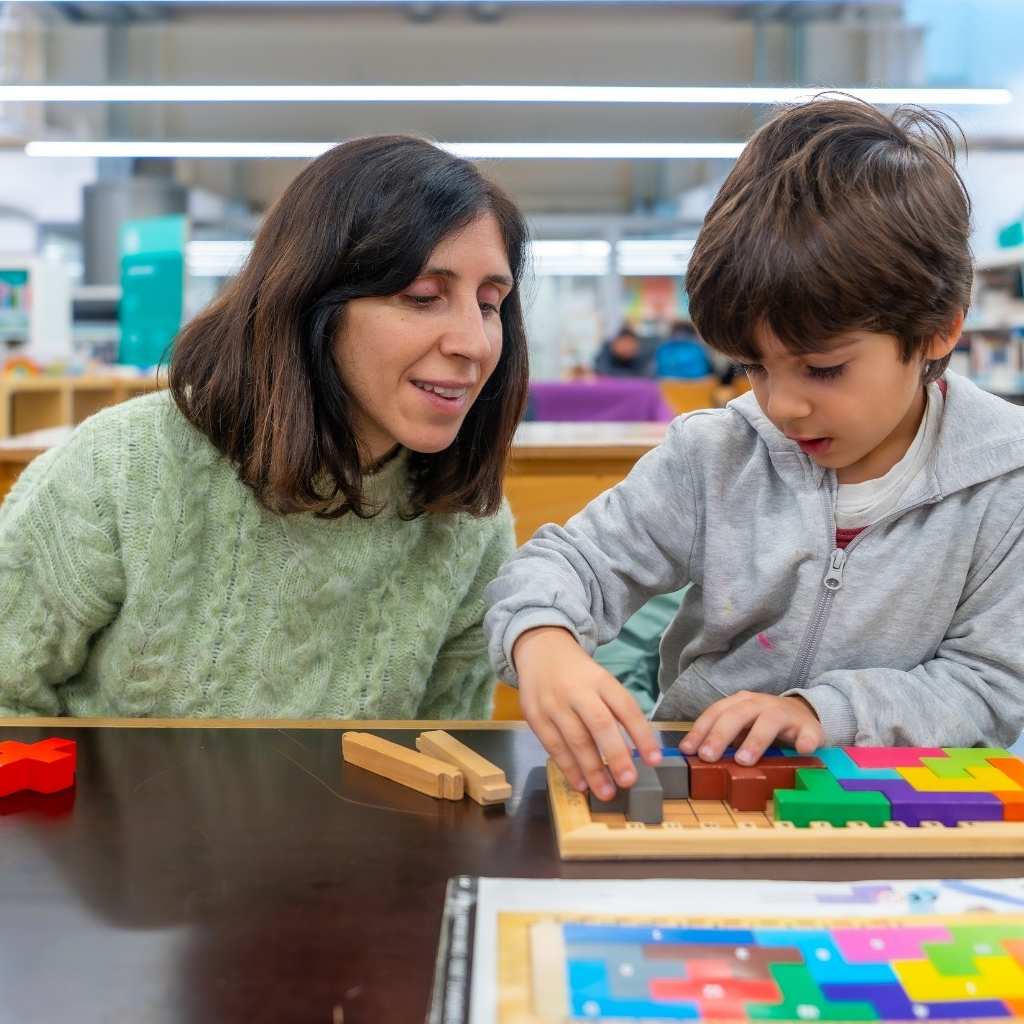
They look for opportunities to teach skills during activities that are motivating and relevant to each child. A favorite game might be an opportunity to practice taking turns or following directions. Snack time to build communication or independence, while community outings can support social interaction and flexible routines.
No two ABA sessions look exactly alike. Activities are selected based on each child’s interests, developmental level, and treatment plan, allowing therapists to practice meaningful skills in natural, everyday contexts, helping children apply those skills at home, at school, and in their communities.
What to Expect from ABA Therapy Over Time
Knowing what to expect from ABA therapy can help families approach treatment with realistic expectations.
Early ABA therapy goals often focus on foundational skills that support future learning. As children make progress, therapists may introduce more advanced goals that build upon those earlier successes.
For example, a child who first learns to request preferred items may later work on carrying on conversations. A child who begins by following simple directions may eventually practice completing more complex routines independently.
Throughout therapy, BCBAs regularly review progress data to determine whether goals have been achieved, need additional practice, or should be modified to reflect new developmental priorities.
Celebrating these milestones, both large and small, can help you recognize how much growth has occurred while keeping expectations focused on meaningful moments rather than speed.
Why Progress in ABA Therapy Goals Isn’t Always Linear
Progress in ABA therapy rarely follows a perfectly straight path. If you’re wondering what to expect from ABA therapy, it’s important to recognize plateaus, changing priorities, and temporary setbacks as a normal part of learning: they don’t mean therapy has stopped working.
The NICHD explains that child development naturally varies from one individual to another. In ABA therapy, this variability may become especially noticeable as children begin practicing skills in more complex environments.
Sometimes therapy also shifts toward helping children maintain previously learned skills or generalize them across new situations before introducing additional goals.
Other factors, such as illness, changes in routine, developmental transitions, or new environments, can temporarily affect your child’s performance and behavior as well. These moments provide valuable information that helps therapists and families refine strategies, adjust goals whenever is needed, and continue supporting each child’s long-term development.
Meaningful progress isn’t defined by constant improvement every single day. It’s reflected in a child’s growing ability to use important skills across the situations that matter most in everyday life.
Every Step Forward Has Meaning at ABA Centers of Pennsylvania
Understanding how ABA therapy goals are created and measured can help families feel more confident throughout the treatment, knowing what to expect from the ABA therapy process. Progress isn’t about reaching someone else’s timeline; it’s about helping each child develop the skills that support greater independence, communication, and participation in daily life.
At ABA Centers of Pennsylvania, our team develops individualized treatment plans designed around each child’s unique strengths and goals. If you’d like to learn more about our ABA services or how therapy goals are developed, call our team at (844) 444-7496 or reach out via our contact form; we’ll call you back.
We’re here to answer your questions and help your family understand what meaningful progress in ABA therapy can look like.