Why are Soft Skills Essential in ABA?
When families begin Applied Behavior Analysis (ABA) therapy, they usually ask about credentials first. Is the BCBA certified? How many hours of training does the technician have? What assessments are used? Those are important questions.
However, after a few weeks of therapy, something else becomes clear. The success of treatment doesn’t depend only on clinical knowledge. It depends on how that knowledge is delivered.
That’s where soft skills in ABA become essential.
Because ABA therapy is not delivered in a vacuum, it happens in homes, in centers, in schools. It happens on hard days, in emotional moments, and at breakthrough milestones. And in those moments, the therapist’s ability to connect, communicate, regulate, and adapt often matters just as much as the behavior plan itself.
In this blog by ABA Centers of Pennsylvania, we will examine what soft skills in ABA mean, why they are essential for outcomes, and how soft skills for ABA professionals influence family trust and child engagement. Finally, we will discuss why developing these skills is just as important as mastering clinical techniques.
What Are Soft Skills in ABA?
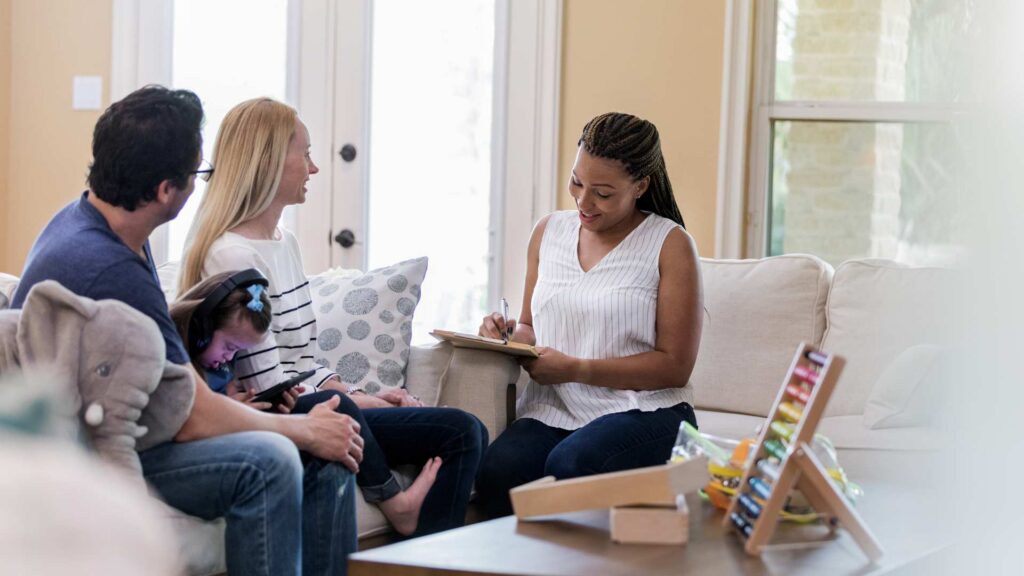
According to Behavior Analysis in Practice, soft skills in ABA refer to the interpersonal, communication, and emotional intelligence abilities that shape how therapy is delivered. Unlike technical competencies, which involve assessment tools, reinforcement strategies, or data analysis, soft skills influence how therapists interact with children, families, supervisors, and educators.
Hard skills cover technical tasks like procedures, data collection, and analysis. In contrast, soft skills are about how therapists relate to and communicate with clients, families, and colleagues, fostering trust and collaboration.
Studies show that when therapists use empathy and work collaboratively, therapy outcomes improve. A positive and supportive environment helps children feel safe, respected, and more motivated to participate in their sessions.
7 Common Soft Skills in ABA
Active Listening
Active listening is more than hearing words. In ABA settings, it means fully attending to a child’s verbal and nonverbal communication, observing subtle behavior changes, and understanding what families are expressing, even when concerns are indirect.
For ABA professionals, active listening strengthens assessment accuracy and builds trust with caregivers. It ensures treatment decisions reflect real-life context, not assumptions.
Clear and Adaptive Communication
ABA concepts can be technical. Soft skills for ABA professionals include the ability to translate behavioral terminology into language that families can understand. Clear communication prevents confusion, increases carryover at home, and supports collaborative goal-setting strategies.
Adaptive communication also means adjusting tone and explanation style depending on whether the conversation is with a parent, teacher, RBT, or supervisor.
Empathy Without Overstepping
Empathy in ABA is the ability to recognize children’s and families’ emotional experiences without becoming reactive or unprofessional. Families navigating autism services may experience stress, uncertainty, or fatigue. Professionals who respond with empathy foster stronger therapeutic alliances.
Importantly, empathy does not replace data-driven practice. It strengthens the environment in which that practice occurs.
Emotional Regulation
ABA sessions can involve behavioral escalations, scheduling challenges, or emotionally charged conversations. Emotional regulation allows clinicians to remain calm, consistent, and solution-focused during high-pressure situations.
For children, especially, a regulated adult model of stability. Emotional consistency supports learning and prevents reinforcement of escalation cycles.
Flexibility and Problem-Solving
Even the most carefully designed behavior plan may require adjustment. Flexibility is one of the most essential soft skills in ABA because children are not static, and environments change.
Problem-solving skills allow ABA professionals to analyze why a strategy may not be working and adjust without frustration or rigidity.
Professional Collaboration
ABA rarely occurs in isolation. Collaboration with teachers, speech therapists, occupational therapists, and families is common. Soft skills for ABA professionals include respectful interdisciplinary communication, openness to feedback, and the ability to align goals across providers.
Cultural Responsiveness
Pennsylvania communities are diverse. Cultural awareness is a critical soft skill in ABA, ensuring that recommendations are realistic and respectful of family values, traditions, and communication norms.
Without cultural responsiveness, even well-designed interventions may fail due to misunderstanding or mismatch.
While these skills may sound intuitive, they are not automatic. They must be intentionally developed and practiced, especially in high-demand clinical environments.
Why Do Soft Skills Matter in ABA Therapy?
ABA therapy often involves working closely with children on the spectrum who experience communication differences, sensory sensitivities, or behavioral challenges. It also involves ongoing collaboration with families who may be navigating stress, uncertainty, or high expectations.
In this context, soft skills in ABA directly influence:
- Child engagement
- Parent confidence
- Team consistency
- Treatment integrity
- Long-term outcomes
A well-designed behavior plan may be clinically sound, but if it is not delivered with clarity, patience, and adaptability, implementation can suffer.
How Soft Skills in ABA Impact Child Engagement
Children respond not only to reinforcement systems but to relational safety. A therapist who is attentive, calm, and responsive creates an environment where learning feels predictable and secure.